Civil Infrastructure
Protection Layers in Railway Construction
Protecting critical railway layers from mechanical damage, abrasion and long-term deterioration.
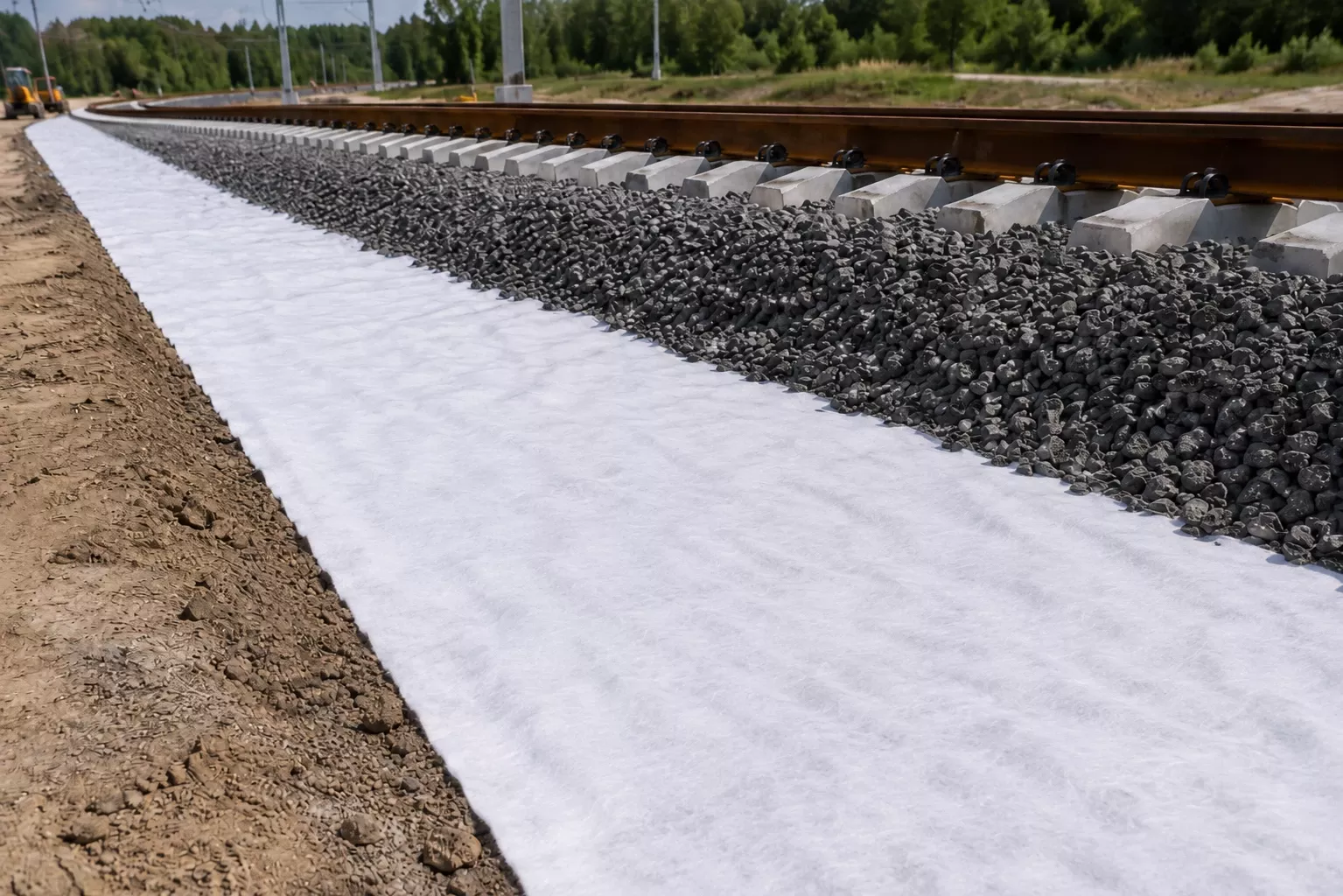
Protecting Railway Infrastructure
Railway construction places high mechanical demands on every layer of the structure. Heavy dynamic loads, vibration, sharp aggregate and changing ground conditions can all put pressure on the materials beneath the track system. To ensure long-term performance, vulnerable layers must be protected from puncture, abrasion and localised damage.
Our needle-punched nonwoven geotextiles act as a robust protection layer within railway constructions. Installed between granular materials and sensitive underlying layers, the geotextile helps absorb mechanical stress and reduces the risk of damage caused by the sharp ballast and aggregate movement of rail vehicles.
This protective function is especially important where drainage systems, waterproofing layers, membranes or prepared subgrade layers need to remain intact throughout the service life of the railway structure. By creating a durable buffer, the geotextile helps preserve the performance of the layers below.
At the same time, the geotextile can support separation and filtration, depending on the project design. This helps maintain layer stability and prevent unwanted soil migration.
Key Benefits
- Protects vulnerable layers against puncture, abrasion and mechanical damage
- Acts as a cushioning layer between sharp aggregate and sensitive surfaces
- Helps extend the service life of membranes, drainage systems or prepared subgrades
- Contributes to separation between materials with different characteristics
- Supports filtration by helping retain fine particles while allowing water flow
- Helps maintain the integrity of the railway structure over time
Example of a Layer Structure
A nonwoven geotextile protection layer is usually installed where mechanical stress from ballast, aggregate or construction activity could damage the materials below.
- Rails and sleepers
The upper track system that carries and transfers train loads into the layers below. - Ballast layer
A coarse aggregate layer that provides track stability, load distribution and drainage. - Sub-ballast or granular support layer
A structural layer that further distributes loads and supports the ballast layer. - Nonwoven geotextile protection layer
Installed as a durable buffer to protect sensitive underlying layers from puncture, abrasion and mechanical stress. - Drainage layer, membrane or prepared subgrade
Depending on the design, this may include a drainage system, waterproofing layer or engineered foundation that needs to remain protected and functional.
Let's Make Your Project Happen!
Connect with our experts to explore how nonwoven geotextiles can provide durable, efficient, and cost-effective solutions for your specific engineering challenges.