Civil Infrastructure
Railway Trackbed Stabilization
Improving track stability, load distribution and long-term railway performance.
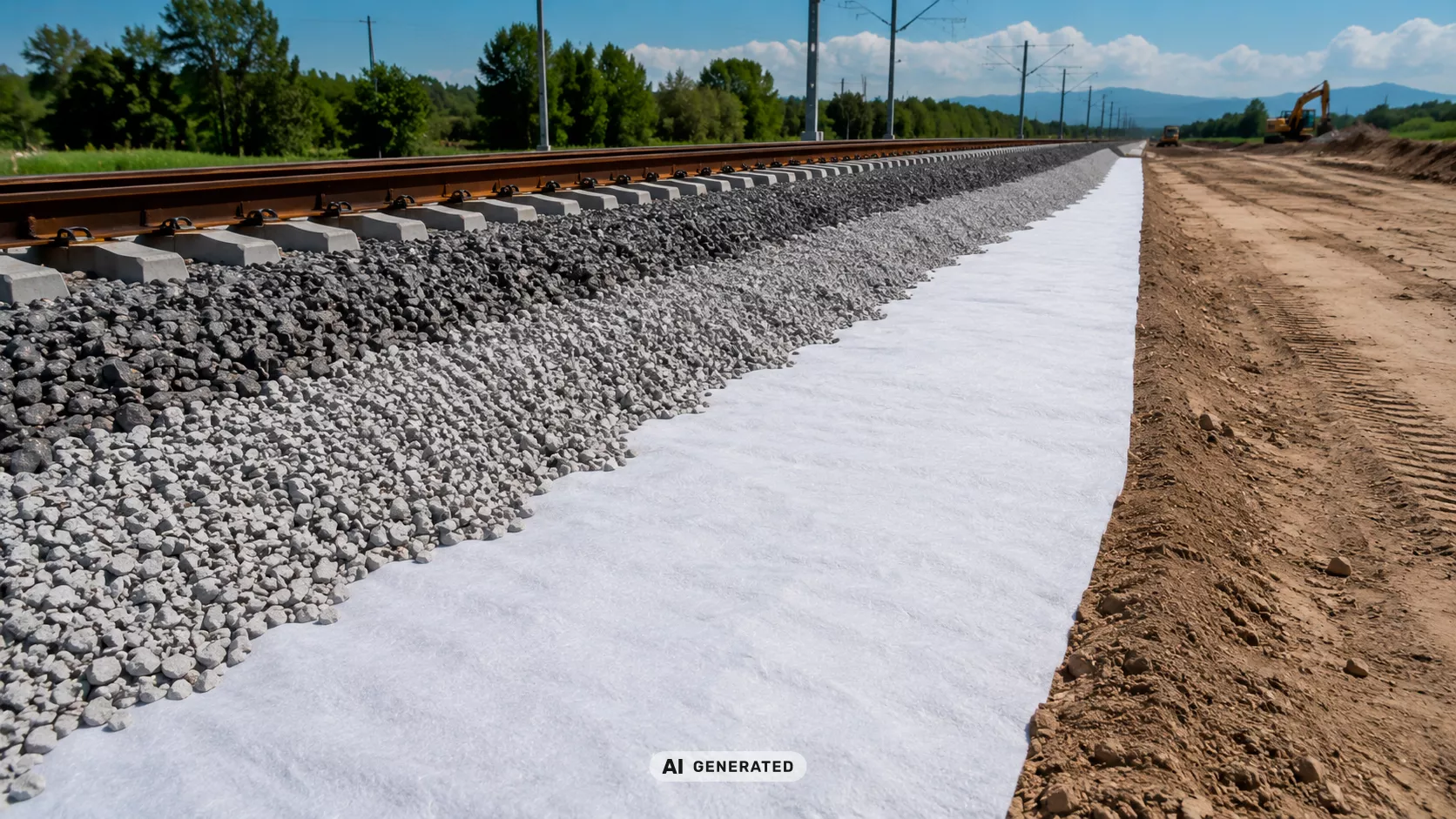
Supporting a Stable Track Structure
Railway trackbeds are exposed to continuous dynamic loads from passing trains. Over time, these loads can cause deformation, settlement and loss of track geometry, especially when the underlying soil is weak, variable or sensitive to water. A stable trackbed is essential to ensure safe, reliable and low-maintenance railway infrastructure.
Our needle-punched nonwoven geotextiles help stabilize railway trackbeds by separating the granular railway layers from the subgrade soil. This prevents fine particles from migrating into the ballast or sub-ballast layers, helping preserve their drainage capacity, mechanical performance and designed layer thickness.
By keeping the different layers properly separated, the geotextile supports better load distribution across the trackbed. It helps reduce localised deformation and contributes to a more stable foundation for the railway structure.
Depending on the project design, the geotextile can also support filtration and drainage. By allowing water to pass through while retaining fine soil particles, it helps prevent excess pore water pressure and contributes to the long-term stability of the railway foundation.
Key Benefits
- Helps stabilize railway trackbeds under dynamic train loads
- Prevents contamination of ballast and sub-ballast layers by fine soil particles
- Maintains the designed thickness and performance of granular support layers
- Reduces the risk of settlement, deformation and loss of track geometry
- Helps extend the service life of railway infrastructure
Example of a Layer Structure
A nonwoven geotextile is typically installed between the granular support layers and the subgrade to improve separation, filtration and trackbed stability.
- Rails and sleepers
The upper track system that carries train loads and transfers them into the structure below. - Ballast layer
A coarse aggregate layer that provides track support, drainage and load distribution. - Sub-ballast layer
A granular support layer that improves load spreading and protects the subgrade from concentrated stresses. - Nonwoven geotextile stabilization layer
Installed between the sub-ballast and the subgrade to prevent material mixing, support filtration and help maintain structural stability. - Subgrade soil
The natural or prepared foundation soil that supports the railway structure.
Let's Make Your Project Happen!
Connect with our experts to explore how nonwoven geotextiles can provide durable, efficient, and cost-effective solutions for your specific engineering challenges.