Hydraulic Engineering
River and Coastal Protection
Helping protect shorelines, riverbanks and hydraulic structures from erosion and water impact.
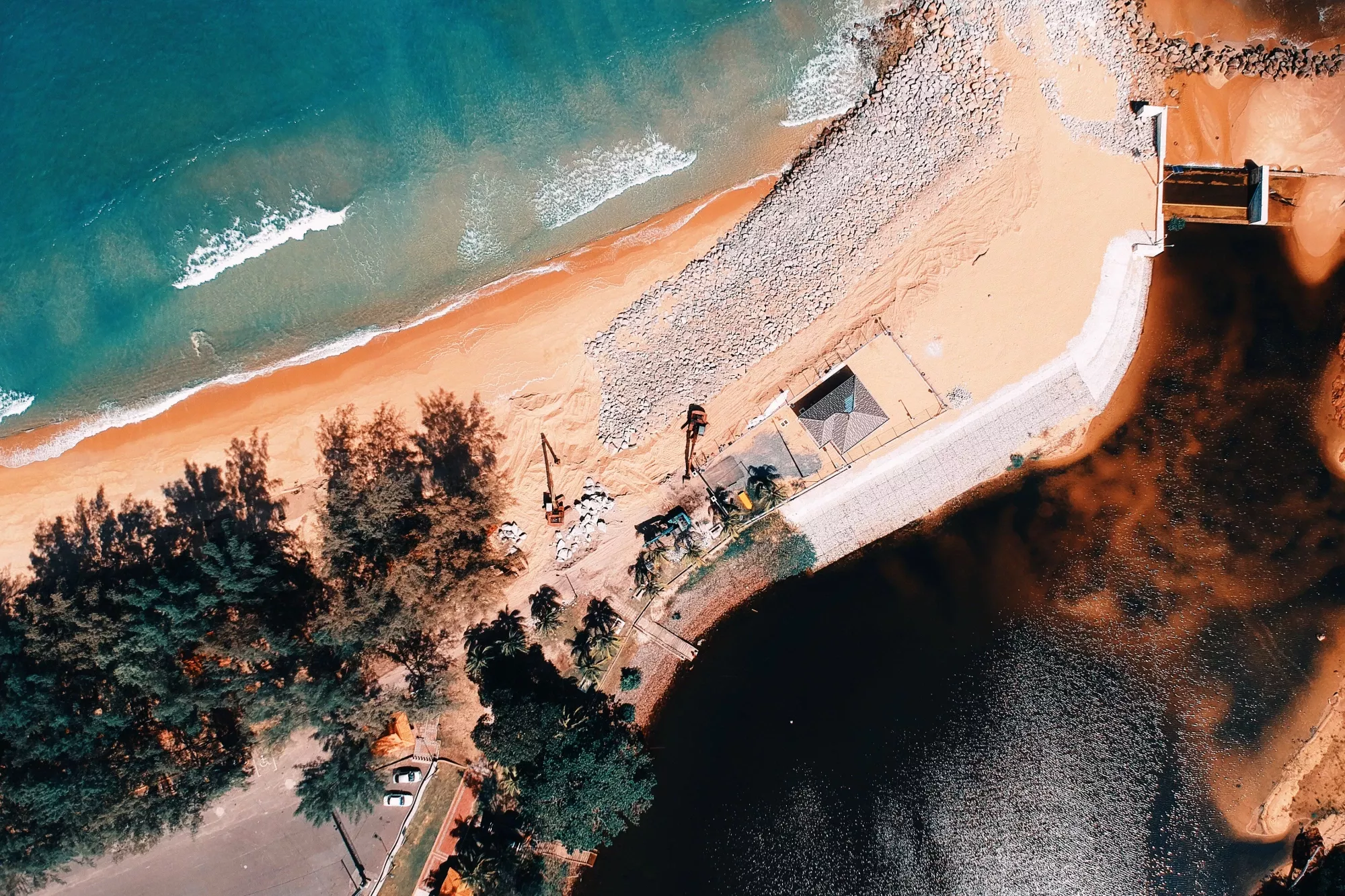
Geotextiles in Flood Protection Structures
Riverbanks, shorelines and coastal structures are constantly exposed to moving water and changing ground conditions. Without proper protection, these forces can cause deterioration of the soil and surrounding infrastructure.
Our needle-punched nonwoven geotextiles support river and coastal protection systems by combining separation, filtration, drainage and protection functions. Installed beneath riprap, rock armour, concrete blocks or other erosion control layers, the geotextile helps prevent fine soil particles from being washed out while allowing water to pass through in a controlled way.
This filtration function is essential in hydraulic environments. It helps reduce soil migration behind or beneath the protective cover, limiting the risk of settlement, instability and progressive erosion. At the same time, the geotextile acts as a separation layer, keeping the foundation soil and protective aggregate layers from mixing.
By supporting the stability of erosion protection systems, our geotextiles help extend the service life of riverbanks, shorelines, canals, embankments and coastal infrastructure exposed to demanding water conditions.
Key Benefits
- Helps prevent erosion and soil loss in river and coastal environments
- Supports filtration by retaining fine particles while allowing controlled water flow
- Separates foundation soil from riprap, rock armour or concrete protection layers
- Reduces the risk of material migration beneath erosion control systems
- Helps protect hydraulic structures from wave action, currents and water impact
- Supports drainage and reduces pressure build-up behind protection layers
Example of a Layer Structure
In river and coastal protection, nonwoven geotextiles are commonly installed beneath the water-facing protection layer. Their role is to support filtration, separation and long-term stability while protecting the underlying soil from erosion.
- Water-facing protection layer
A cover layer such as riprap, rock armour, concrete blocks or other erosion-resistant materials that absorbs the impact of waves, currents and flowing water. - Granular bedding or support layer
Where required, this layer provides additional support and helps distribute loads from the protective cover. - Nonwoven geotextile filter layer
Installed beneath the protection system to retain fine soil particles, allow controlled water flow and prevent washout of the underlying ground. - Foundation or embankment soil
The natural or prepared soil forming the riverbank, shoreline, canal edge or coastal embankment.
Let's Make Your Project Happen!
Connect with our experts to explore how nonwoven geotextiles can provide durable, efficient, and cost-effective solutions for your specific engineering challenges.